

 Locate us
 Make An Appointment
 Hotline Number
 Lumbar Spinal Canal Stenosis
By Dr Ngian Kite Seng & Dr Tan Chong Tien
Spinal Canal Stenosis is one of the most common low back disorders seen in our practice. This is a result of narrowing of the tunnel through which the nerves travel to serve the legs and bladder and bowel function. In most cases, it is a result of degeneration.
Most patients experience an insidious onset of leg aches, weakness, pain or numbness or a combination of these discomforts may develop over months or years. Typically, the discomfort is worse with walking and standing, climbing stairs and slopes and is relieved by sitting, bending forward or squatting. Gradually, the distance the patient can walk becomes shorter and the time they can stand also decreases.
In more severe cases, discomfort may occur even at rest. Occasionally, such symptoms may be more acute and severe. The condition most often affects older patients in their 60’s and 70’s where there is a predisposing situation or where degeneration has occurred faster, such as prior injuries, spondylolisthesis, congenitally narrow canals, the symptoms may be worse and the age of onset may even be 10-20 years earlier.
Treatment may initially be conservative. A combination of postural adjustment, physical therapy, nerve medications, pain medications and injections may help some patients. In patients who have persistent symptoms and significant disability, surgery is a useful option. Surgery aims to widen the tunnel through which the nerves travel and in some cases where the spine is not stable or deformed, fusion and instrumentation may need to be added.
In patients with severe spinal canal stenosis or with instability such as spondylolisthesis, the use of instrumentation allows for a more complete decompression. Improvement in spinal alignment with the use of instrumentation also helps with indirect neural decompression.
With surgery, most patients experience increase in mobility and improved quality of life.
5 Common Patterns of Backache
- Transient backache following muscular activities
Condition: back strain - Sudden acute back pain and sciatica
Below 20 years old Conditions: spondylolisthesis, infection
Between 20-40 years old Conditions: acute disc prolapse
Elderly Osteoporotic compression fractures - Chronic low back pain, with or without referred leg pain
Above 40 years old with recurrent episodes of pain
Conditions: lumbar spondylosis, facet joint dysfunction, segmental instability
Others: ankylosing spondylitis, chronic infection - Back pain ands neurogenic claudication
Above 50 years old (with long standing back problems)
Typically difficulty with walking and standing relieved by sitting, bending, squatting
Condition: lumbar spinal canal stenosis - Severe and constant pain
Conditions: infection, tumor, metastatic disease
Recent Articles
Lianhe Zaobao – 22th December 2011 Pancreatic Cancer and Bile duct Cancer are one of the rarest types of cancer. Pancreatic cancer is not a hereditary…
Read more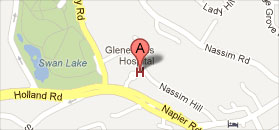
 Send us an Enquiry